Our brand
SFBA
A clothing brand from Marin County, and a shop built for the person who sees one of its shirts on a phone and wants it.
The problem
SFBA, short for Sorry For Being Annoying, was a name and a joke. It needed a mark, a voice, a first run of shirts and a shop, planned around one visitor: someone who sees a shirt in a post and taps through on a phone.
The goal
A brand that reads from four letters and one joke, and a shop where someone who taps through from a post can see the shirt on a person, pick a size and buy, without starting from the home page.
Decision 1
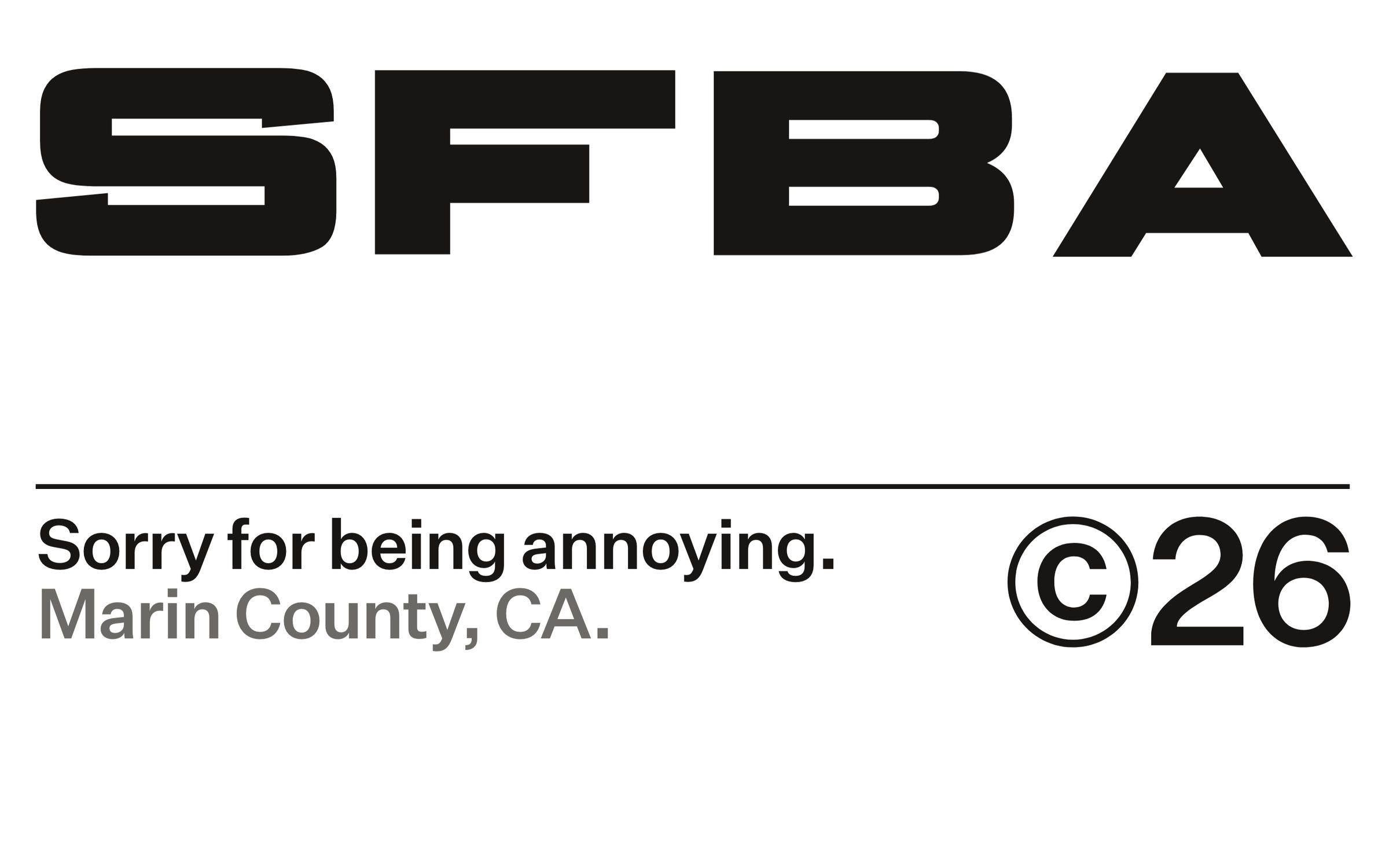
Four letters do the work of a logo
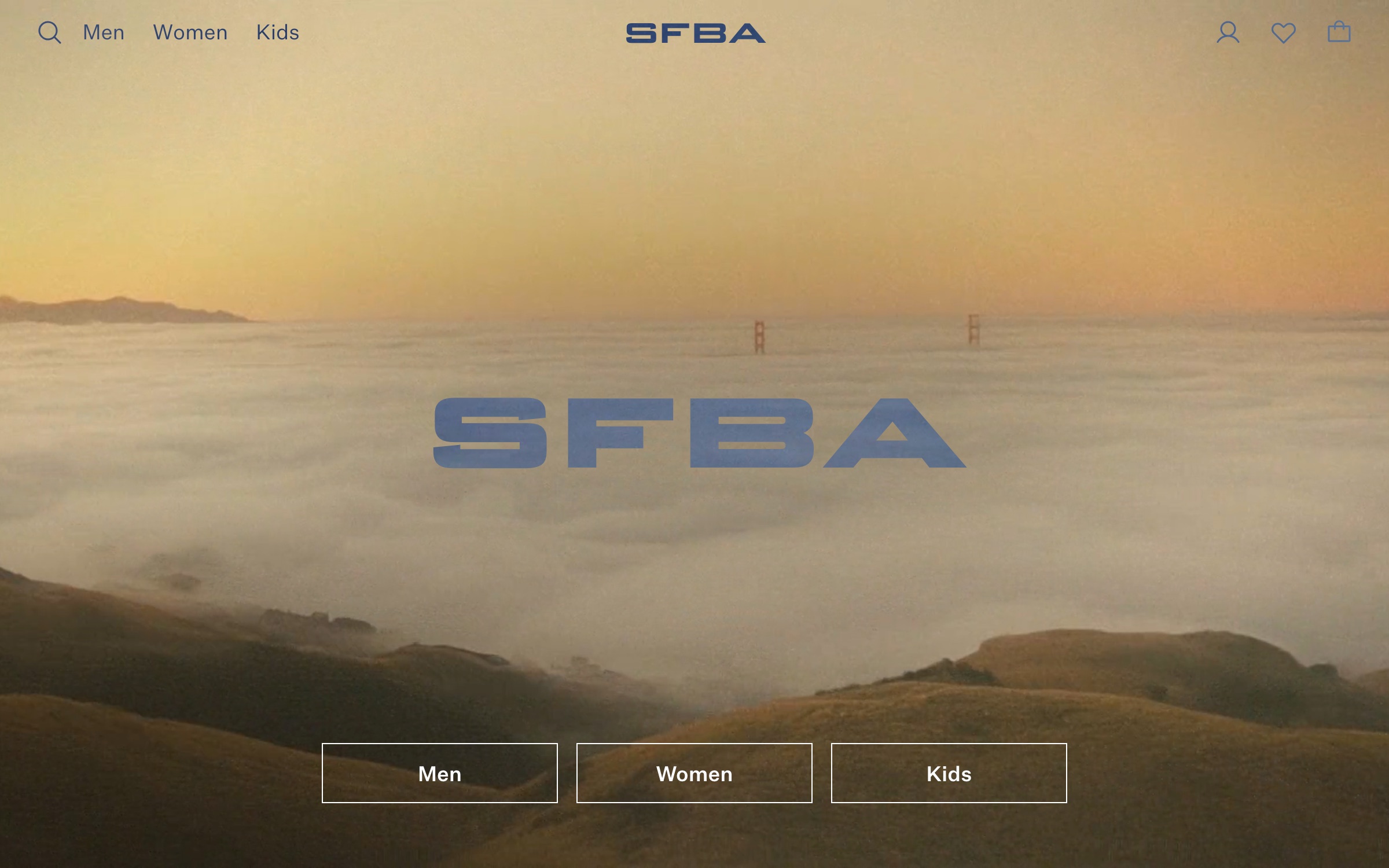
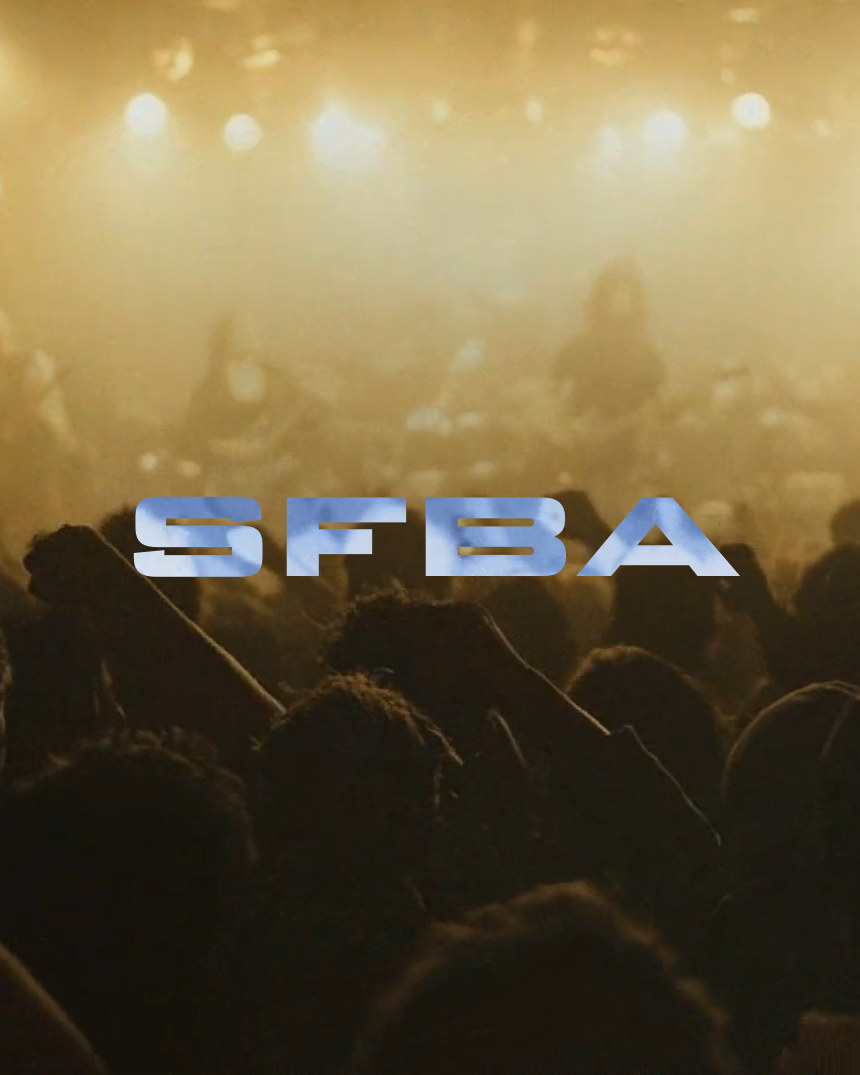
The brand has one mark: its name. So the name had to hold up wide over a film, small in a header, and alone at the foot of a page.
We set it in Science Gothic, a typeface that can be set wider or narrower without its letters changing shape. At the foot of the home page each letter fills one grid column: we set each letter’s width on its own until it reached both edges of its column.

Decision 2
Saying sorry first
SFBA stands for Sorry For Being Annoying. The brand starts from the idea that everyone is annoying in their own right, and that sometimes it is funny.
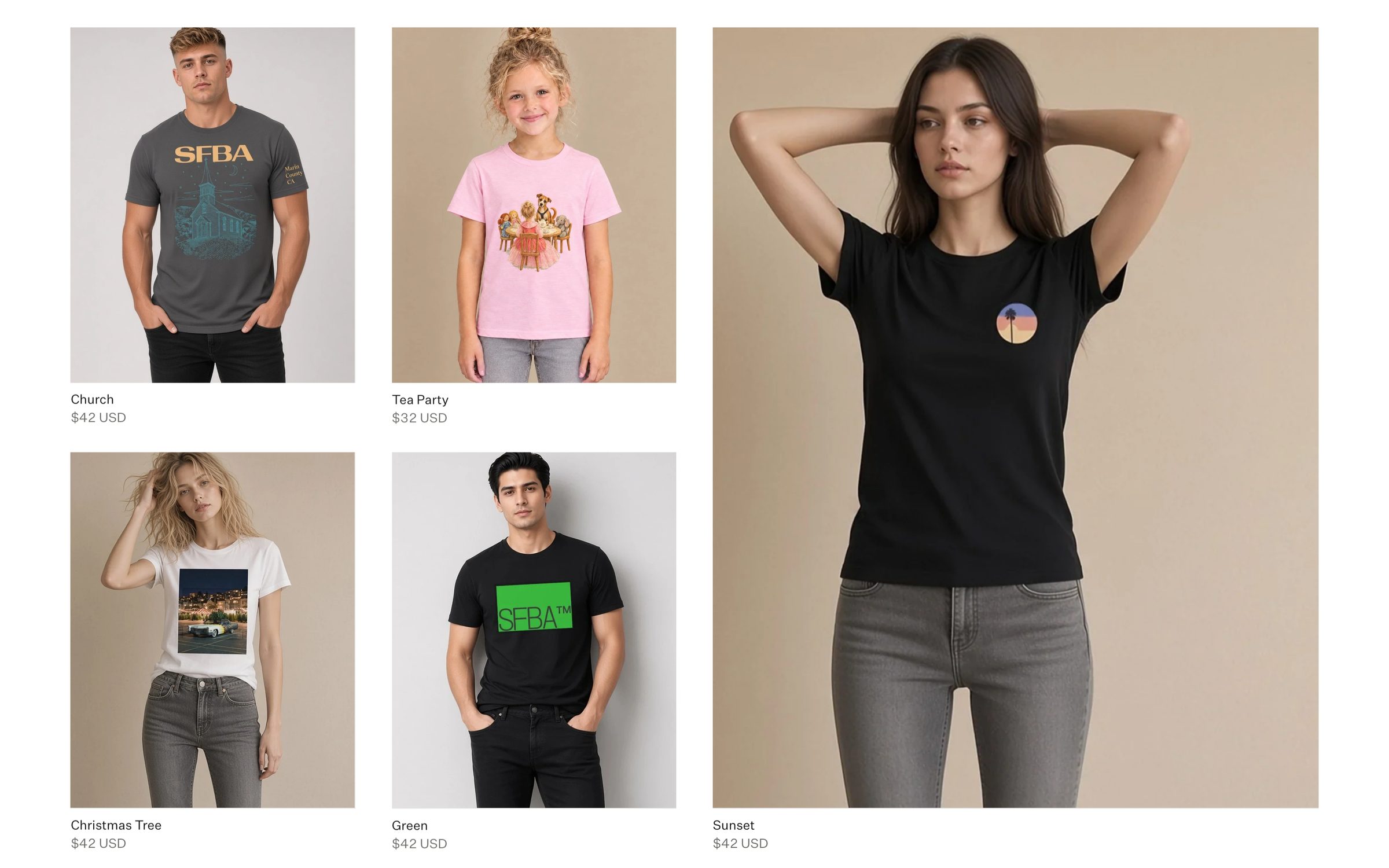
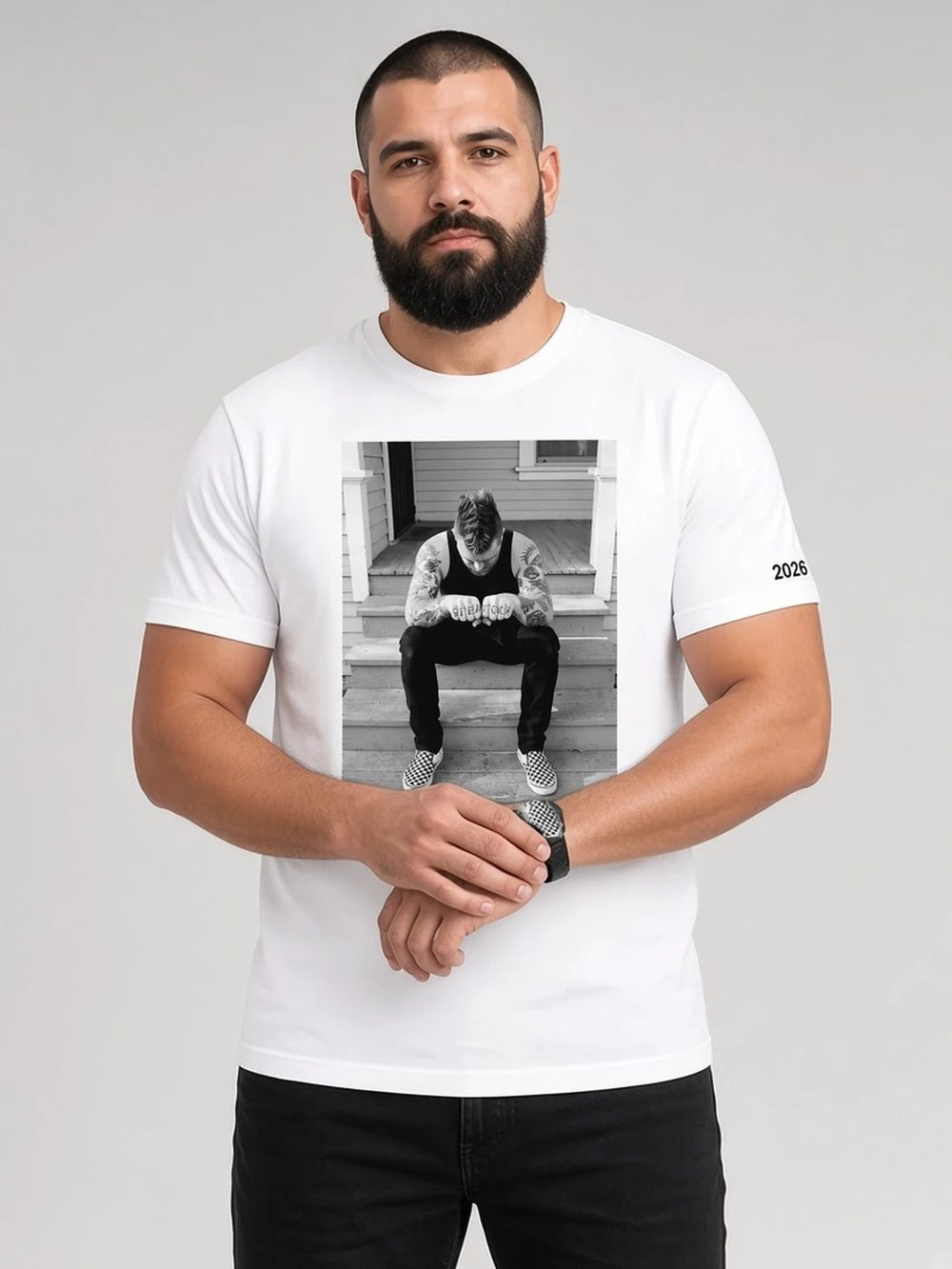
Apologizing up front lets the brand be loud without taking itself seriously, and it gives every other line a voice to follow: the pre-order note says sorry for making you wait, and the knuckle tattoos on one shirt spell SFBA and MCCA, for Marin County, California.

Decision 3
Shirts that belong to a place
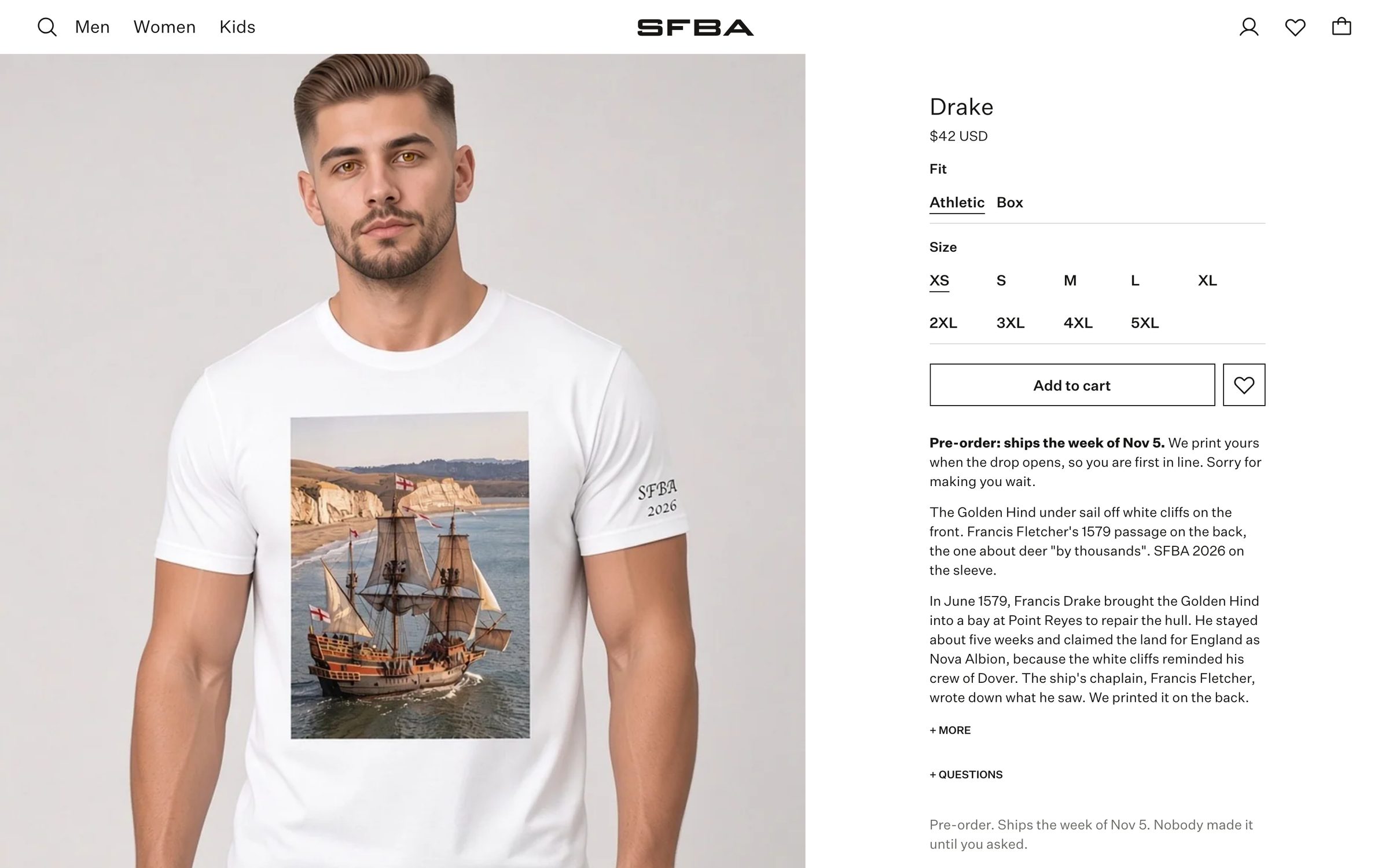
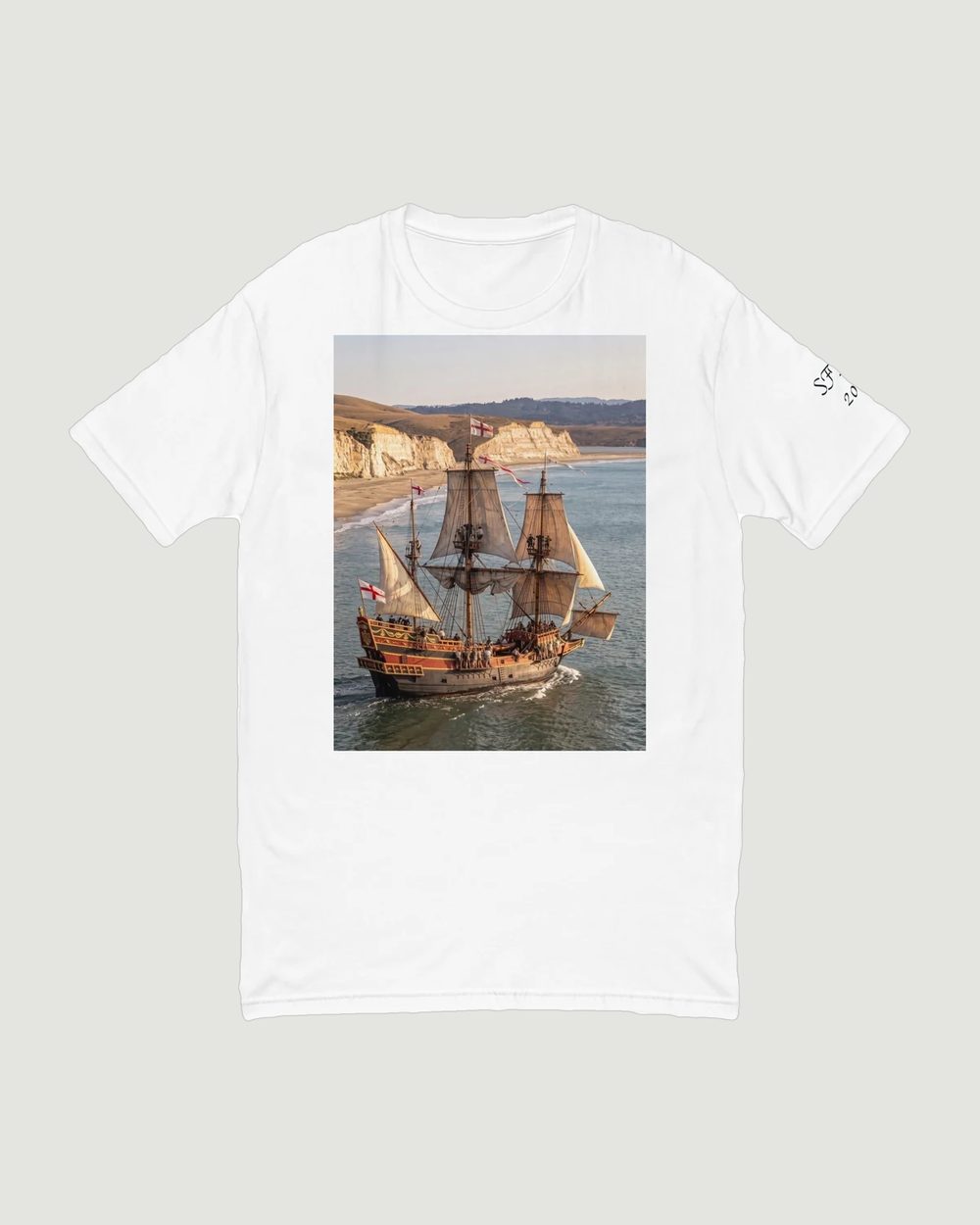
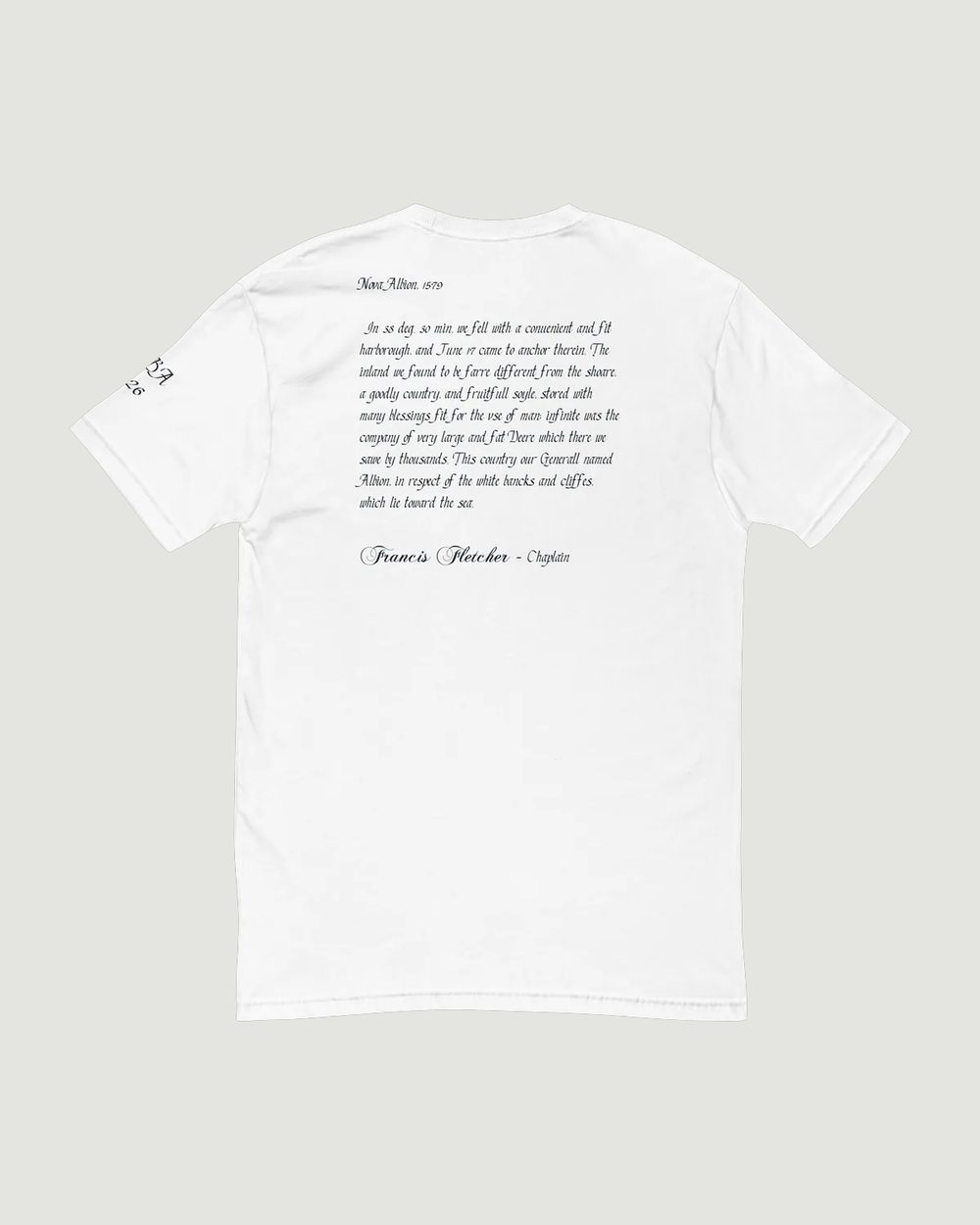
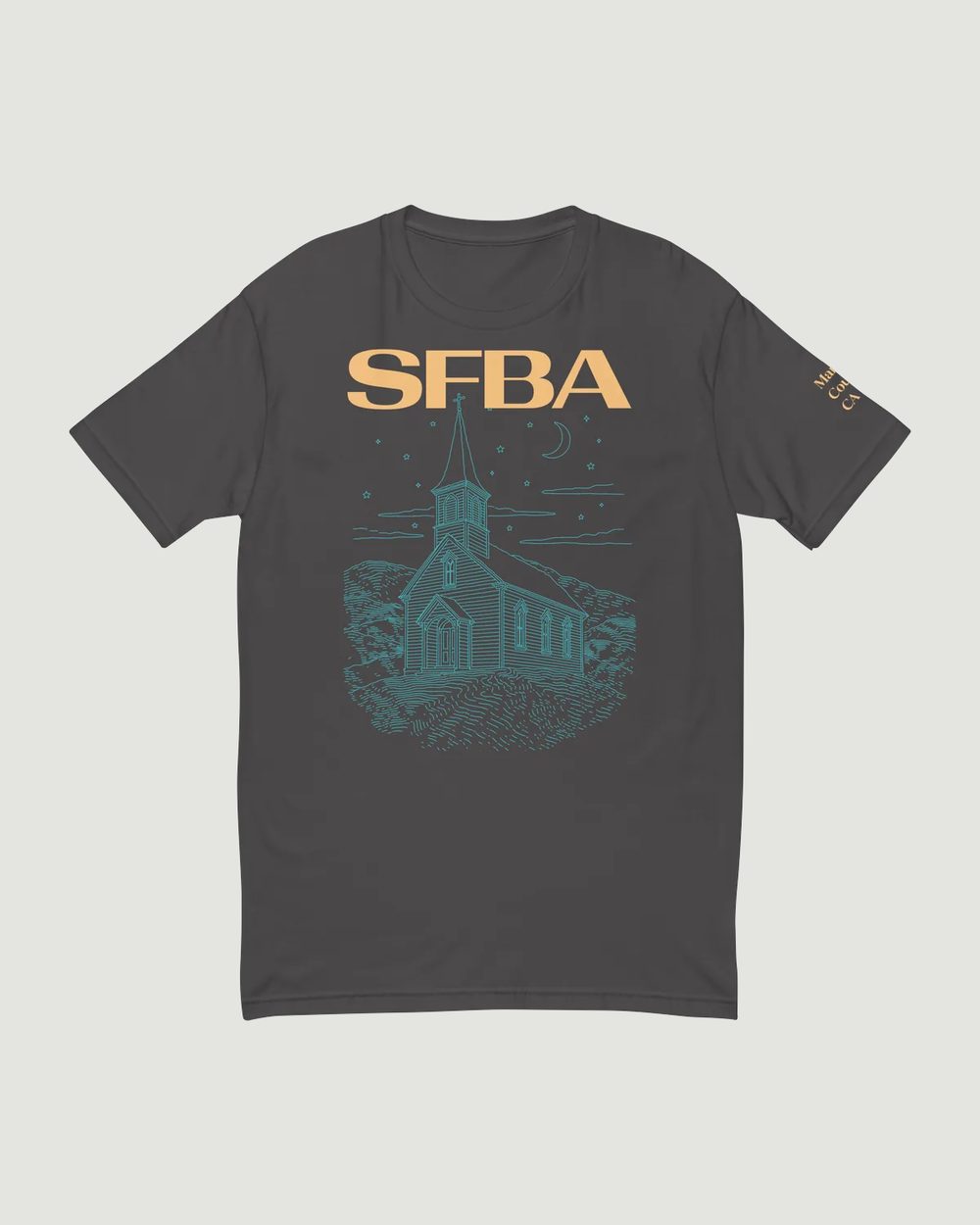
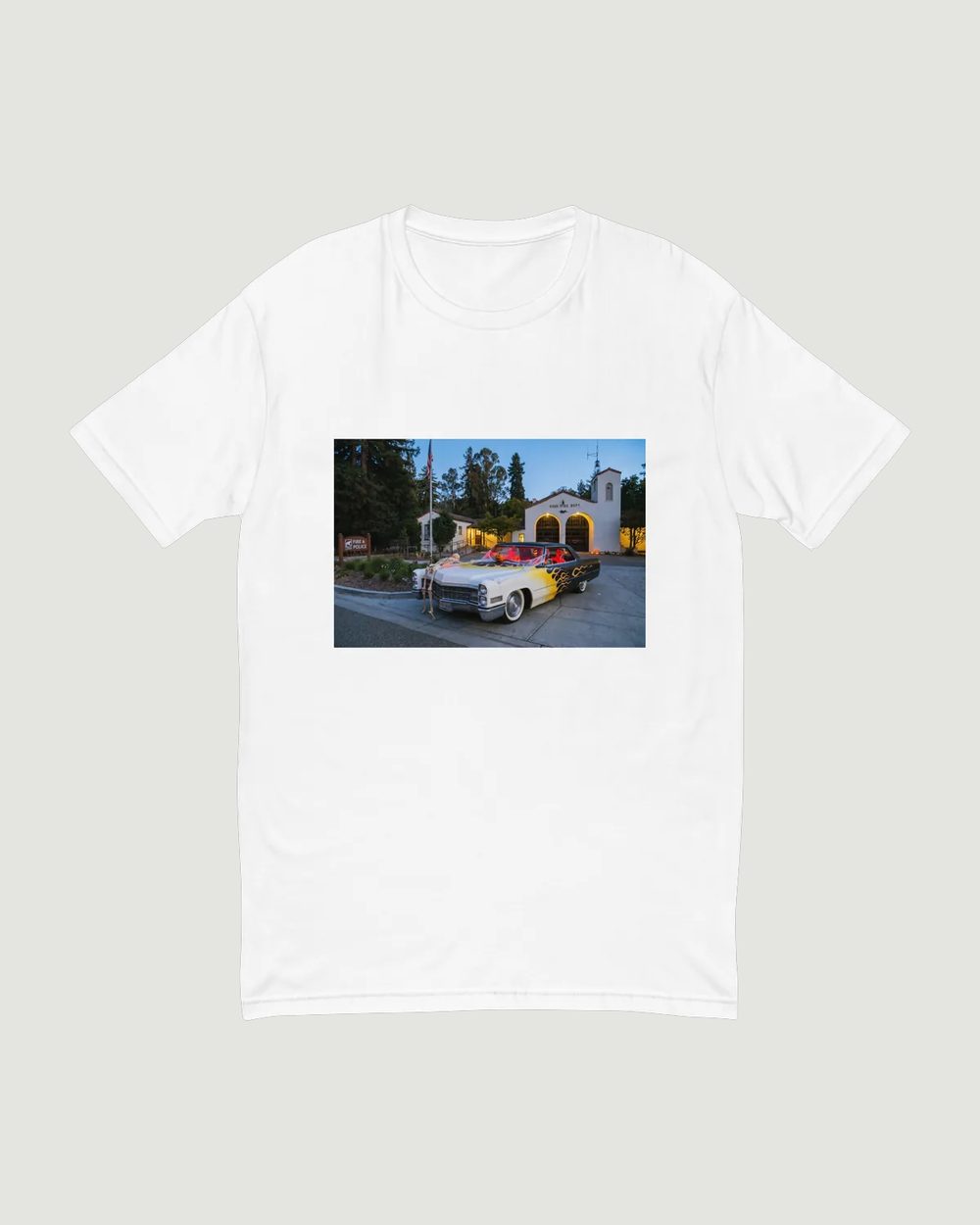
SFBA is meant to be more than a set of shirts: it is clothing designed in Marin County. So most shirts start from a local place or story, and the story stays on the shirt. Drake puts the Golden Hind off the white cliffs of Point Reyes, with Francis Fletcher’s 1579 account of the landing on the back. Church is a line drawing of St. Mary’s in Nicasio, built in 1867. Ross Fire parks a flame-painted ’66 Cadillac in front of the Ross firehouse.
The build
Built for the tap from a post
The shop is built for one visitor: someone who sees an SFBA shirt on Instagram or TikTok and taps through on a phone. They land on that shirt’s page rather than the home page, and want to see it on a person, pick a size and buy.
So every product page works on its own. Each shirt is shown four ways, front and back laid flat and on a model, and the interface stays paper, ink and gray, with one blue for focus and hover, so the color comes from the shirts. sfba.shop runs on Shopify, with a storefront we designed and built.